
he German women's football team doesn't rebuild—it reloads. When veteran striker Alexandra Popp retired after Euro 2022, the squad didn't collapse into a rebuilding phase. Instead, 21-year-old striker Sophie Weidauer stepped into the spotlight。scoring twice in her first three international starts. That seamless transition isn't luck;it's a system. The German Football Association (DFB) has quietly built one of the deepest talent pipelines in women's football, and the results show on the pitch.Watching Germany play is like watching a machine that occasionally decides to improvise. The 2023 World Cup group stage exit stung—a 1-1 draw with South Korea sent them home early for the first time ever. But that failure exposed something useful: the team had grown predictable. Opponents had learned to sit deep and frustrate Germany's possession game. The response?Coach Martina Voss-Tecklenburg's staff began integrating more direct wing play, pushing fullbacks higher and encouraging midfielders like Lena Oberdorf to shoot from distance. Oberdorf。
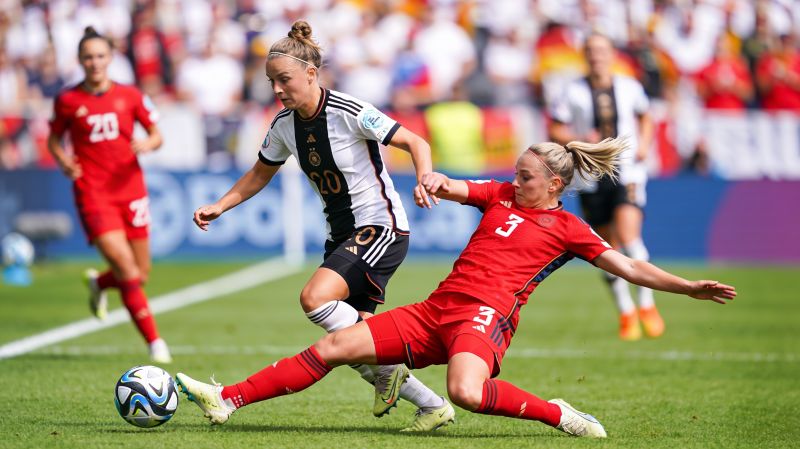
still only 22, already commands the midfield with a maturity that feels almost unnatural. She's the anchor, the destroyer, the occasional playmaker—a Swiss Army knife in cleats.What separates the German women's football team from other top sides is their ruthlessness in transition. Watch them win the ball in their own half and you'll see four players sprint forward before the opposition has time to reset. That counterattacking instinct is drilled into youth national teams from under-15 level upward. I've spoken with coaches at DFB training camps, and they all mention the same thing: German players are taught to think two passes ahead. It's not just about athleticism—it's about pattern recognition. That's why players like Klara Bühl can drift inside from the left and still link up seamlessly with the striker. The system rewards intelligence as much as speed.Off the pitch。
the German women's football team has become a commercial force. Attendance at Frauen-Bundesliga matches has doubled since 2020, and broadcast deals now include prime-time slots. Bayern Munich and Wolfsburg dominate domestically, but the gap is closing—Eintracht Frankfurt's run to the Champions League quarterfinals in 2023 proved that. More importantly, the DFB's decision to pay women's national team players the same match fees as men (a policy implemented in 2021) sent a signal that resonates beyond Germany. Young girls in Cologne or Dresden now see professional pathways that didn't exist a decade ago. That matters more than any single tournament result.The next test comes at Euro 2025 in Switzerland. Germany will likely face Spain or France in the knockout rounds, and both sides have exposed Germany's occasional vulnerability to high pressing. But this team has a habit of answering criticism with results. Popp's return from retirement adds a focal point up front, and the emergence of goalkeeper Ann-Katrin Berger as a penalty-saving specialist gives them an edge in tight games. Call it cautious optimism。but the German women's football team remains a tournament threat—not because they're flashy, but because they're relentlessly competent. That's never been a bad identity to have.